
When a project calls for a bolt, the choice between a hex bolt and a carriage bolt is one of the most common decisions engineers and buyers face. Both are essential fasteners, but they are designed for different joint conditions, installation methods and loading scenarios. This guide compares hex bolts and carriage bolts across design, application, installation and cost, so you can choose the right fastener for your project.
What Is a Hex Bolt?
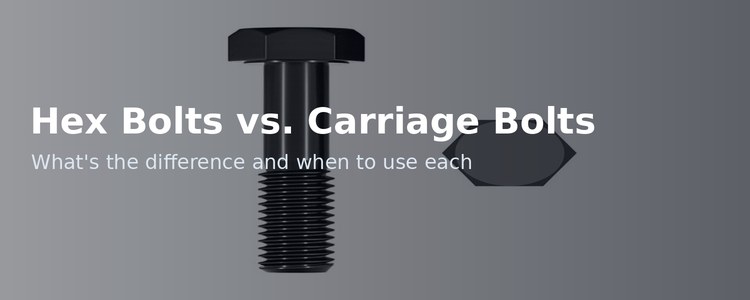
A hex bolt has a six-sided hexagonal head designed to be driven with a wrench or socket. It is normally used with a nut and washer, and can be installed and removed from the head side. Hex bolts are available in a wide range of sizes, grades and surface finishes, and are the workhorse of structural steel, machinery and general fabrication.
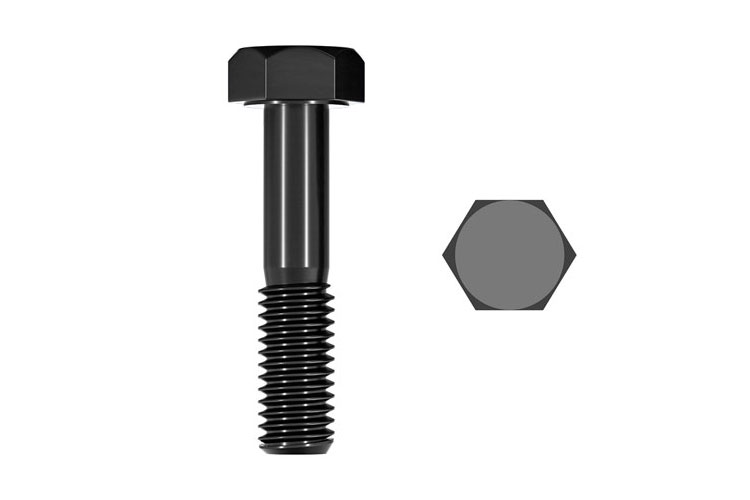
Hex bolts are defined by standards such as ISO 4014, ISO 4017, DIN 931, DIN 933 and ASTM A325. They can be supplied fully threaded or partially threaded, with plain, zinc-plated, hot-dip galvanized or Dacromet finishes.
What Is a Carriage Bolt?
A carriage bolt (also called a coach bolt) has a domed or countersunk head with a square neck directly beneath it. The square neck bites into the material and prevents the bolt from rotating while the nut is tightened from the other side. This makes carriage bolts ideal for wood-to-wood, wood-to-metal and metal-to-metal joints where only one side is accessible.
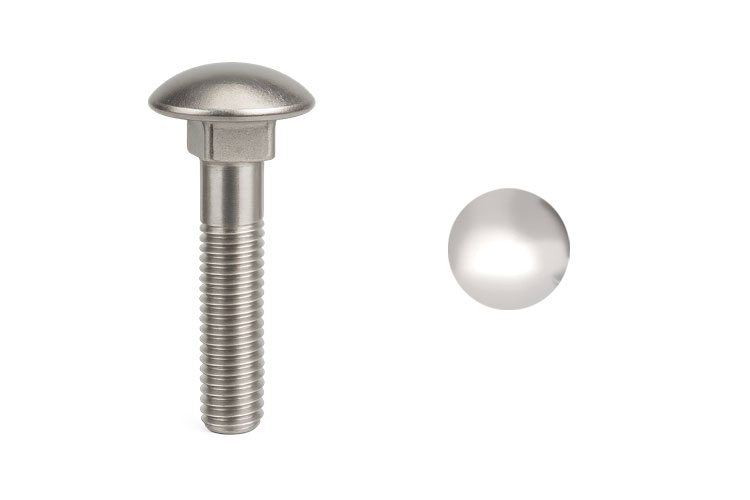
Carriage bolts are commonly manufactured to DIN 603, ISO 8677, ASME B18.5 and GB/T 14. Typical uses include timber framing, fencing, furniture, playground equipment, agricultural machinery and trailers.
Hex Bolt vs. Carriage Bolt: Key Differences
How to Choose the Right Bolt for Your Project
Choose a hex bolt when both sides of the joint are accessible, when you need easy removal and re-tightening, or when the application is structural steel and machinery. Choose a carriage bolt when only one side is accessible, when appearance matters (the smooth dome head is the finished side), or when the joint is wood-based and the square neck provides built-in anti-rotation.
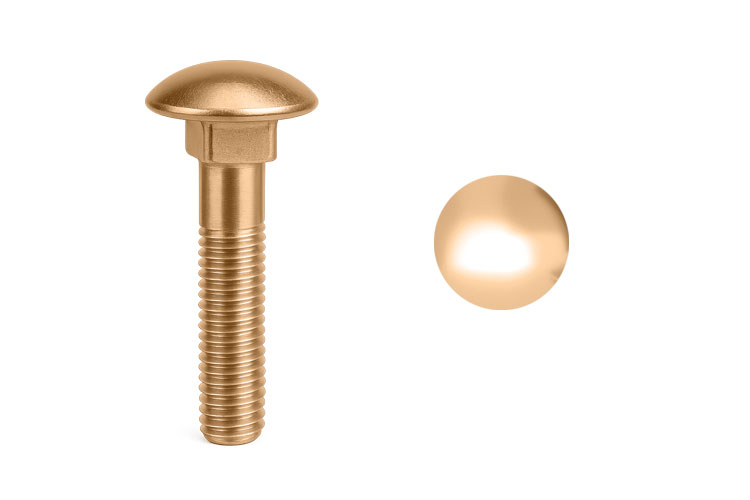
For decorative or marine applications, brass and stainless steel carriage bolts combine corrosion resistance with an attractive finish. For structural applications, always confirm the required property class (e.g. 4.8, 8.8, 10.9) with your engineer.
Sourcing Hex and Carriage Bolts
When sourcing from a manufacturer or supplier, provide the standard, size (diameter × length), property class, material and surface finish. Fastener Hall’s bolt collection covers hex bolts, carriage bolts and more, with RFQ support and factory-direct pricing. Send your drawings or part numbers — our engineers typically reply within 24 hours.
Hex Bolt Specifications and Grades
Hex bolts are manufactured in a broad range of property classes. The most common metric grades are 4.8, 8.8, 10.9 and 12.9. Grade 8.8 is the default for structural steel connections and general machinery, offering a good balance of strength and ductility. Grade 10.9 and 12.9 are used where very high tensile strength is required, such as automotive engine components, heavy equipment and high-pressure flanges. Each grade has a defined proof load, yield strength and tensile strength, and the grade marking on the bolt head (e.g. 8.8 or 10.9) must always be verified before installation.
For inch series hex bolts, common grades include ASTM A307 (general purpose, low carbon), ASTM A325 (structural, high strength), ASTM A490 (structural, alloy steel) and SAE J429 Grade 5 / Grade 8. The choice of grade depends on the design load, joint type and applicable building code. Fastener Hall supplies hex bolts with mill certificates and can arrange third-party testing to verify mechanical properties.
Carriage Bolt Specifications and Materials
Carriage bolts are typically made from low or medium carbon steel, stainless steel (A2-70 or A4-80) or brass. Carbon steel carriage bolts are usually supplied in property class 4.8, which is adequate for wood and light metal joints. The square neck under the head is the defining feature: it has a side-to-side dimension matched to the hole so that once driven into a square hole or into soft wood, the bolt cannot rotate while the nut is tightened.
Stainless steel carriage bolts are preferred for outdoor furniture, marine decks, boat hardware and any application exposed to moisture or chemicals. Brass carriage bolts are used mainly for decorative trim, electrical fittings and historical restoration where a warm, corrosion-resistant finish is required. Head styles include round, mushroom, countersunk and ribbed-neck variants, and lengths typically range from 16 mm to 300 mm with diameters from M6 to M24.
Surface Finishes and Corrosion Protection
Surface finish directly affects corrosion resistance, appearance and cost. Plain (bright) bolts are uncoated and suitable only for dry indoor use. Electroplated zinc is the most economical protective finish for indoor and light outdoor use. Hot-dip galvanizing provides a thick zinc layer for outdoor structures, fencing and agricultural equipment, and is the standard choice for galvanized steel connections. Black oxide offers mild protection with a matte black appearance for tooling and decorative applications. Dacromet and zinc-nickel finishes give superior corrosion resistance for automotive and marine use.
When specifying a finish, consider the environment (humidity, salt, chemicals), the material being fastened (pressure-treated wood is corrosive to plain steel), and any standards requirement (e.g. ASTM B695 for zinc coating, ASTM A153 for hot-dip galvanizing). Fastener Hall can supply salt spray test reports to verify coating thickness and corrosion performance.
Installation Best Practices
For hex bolts, always use a hardened washer under the nut (and ideally under the head) to distribute load and prevent galling. Tighten to the specified torque using a calibrated torque wrench; under-tightening causes loosening, while over-tightening can stretch the bolt beyond its yield point. For structural applications, follow the preload calculation and re-check tension after a period of service.
For carriage bolts, drill a pilot hole slightly larger than the square neck in hardwood, or drive the bolt directly into softer woods so the square neck embeds itself. If the bolt is used in metal, a pre-punched square or hex hole is recommended so the neck cannot spin. Always fit a washer and nut on the opposite side and tighten with a socket wrench. Where vibration is a concern, use a nylon-insert lock nut or a spring washer under the nut.
Common Applications Comparison
Hex bolts dominate structural steel, machinery, automotive, bridge construction, scaffolding and heavy fabrication, because their hexagonal head allows precise torque application and easy removal. Carriage bolts are the go-to choice for timber frame construction, post-and-beam joints, playground equipment, fences, garden furniture, trailers, wooden crates and any joint where only one side is accessible and a smooth finished head is desirable.
In many mixed structures, both types appear: hex bolts for the steel frame and carriage bolts for the timber decking and cladding. Ordering both from a single supplier simplifies inventory and quality control. Fastener Hall covers both product lines under one roof, with consistent documentation and shipping.
How to Order Hex and Carriage Bolts
To request a quotation, please provide: (1) the standard (e.g. ISO 4014, DIN 603, ASME B18.5); (2) the diameter and length; (3) the property class or grade; (4) the material and surface finish; (5) the quantity and destination port. Our sales engineers will confirm the specification, lead time and freight options, and can arrange samples for approval before mass production.
Frequently Asked Questions
- Can a carriage bolt be used with a nut? Yes, carriage bolts are always used with a nut on the opposite side; the square neck prevents rotation while the nut is tightened.
- What is the difference between a coach bolt and a carriage bolt? They are the same fastener — “coach bolt” is the British term and “carriage bolt” the American term for the round-head square-neck bolt.
- What torque should I use for an 8.8 hex bolt? It depends on diameter and friction; typical M8 8.8 preload torque is about 25–30 N·m with lubricated threads. Always follow the design specification.
- Do you supply samples? Yes, standard sizes are available as samples; you pay only the courier cost.
- What is the lead time? Standard hex and carriage bolts: 15–25 days after confirmation; samples 5–7 days.