

Nuts and bolts are the most widely used fasteners in the world. A bolt provides the clamping force; a nut holds the joint together. But choosing the wrong size, thread or strength grade can lead to loosening, stripping or even structural failure. This guide explains how to read bolt sizes, understand thread types and match the right strength grade for your application.
How to Read Bolt and Nut Sizes
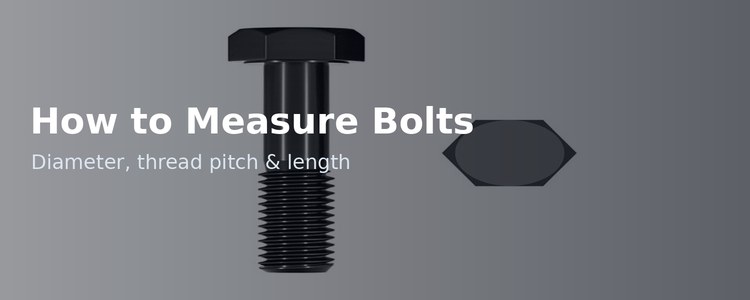
A bolt size such as M8 × 30 means: M8 = metric diameter 8 mm, and 30 = thread length in mm. For inch fasteners, a size like 1/4″-20 means 1/4 inch diameter and 20 threads per inch (UNC). Matching nuts follow the same size system — an M8 nut fits an M8 bolt, and a 1/4″-20 nut fits a 1/4″-20 bolt.
Metric vs. Imperial Threads
Metric threads use millimetre pitch (e.g. M8 × 1.25), while imperial threads use threads per inch (TPI). Standard metric coarse pitch is used for general applications; fine pitch is used where vibration resistance or precise adjustment matters. Fastener Hall’s full fastener range covers both metric and inch series.
Bolt Strength Grades Explained
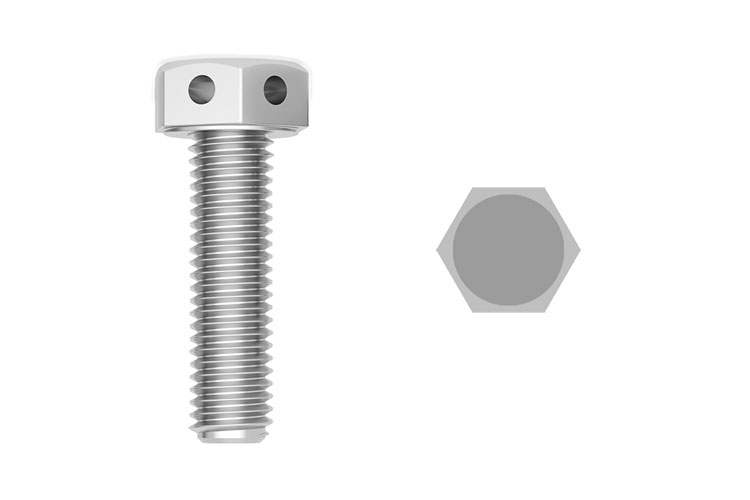
Metric bolts are marked with a two-number grade such as 4.8, 8.8 or 10.9. The first number is 1/100 of the tensile strength in MPa; the second number is the yield ratio. Grade 4.8 is general purpose, 8.8 is high strength (common in steel structures), and 10.9 is very high strength for critical connections. Inch bolts use grades such as ASTM A307 (low) and A325/A490 (high strength).
Common Nut Types
The hex nut is the most common type, used with hex bolts. Flange nuts spread the load with an integrated washer. Nylon-insert lock nuts resist vibration. Castle nuts accept a cotter pin for safety-critical joints. Explore the full nut range to find the right match for your bolts.
How to Match Nuts and Bolts Correctly
Always match the nut grade to the bolt grade — never pair a low-grade nut with a high-strength bolt. Use the same thread system (metric or imperial) and the same pitch. For vibrating environments, add a lock nut, spring washer or thread-locking compound. When in doubt, send your drawing or part number to our engineers for a recommendation.
Submit an RFQ with your sizes and grades, and we will respond with factory-direct pricing, lead times and shipping options within 24 hours. You can also chat with us on WhatsApp.
Thread Types: Coarse, Fine and Extra-Fine
Within each metric diameter there are several pitch options. Coarse thread (e.g. M8 × 1.25) is the default because it assembles faster, resists cross-threading and is stronger in soft materials. Fine thread (e.g. M8 × 1.0) has a smaller pitch, which gives a larger minor diameter, higher tensile strength and better vibration resistance, and allows finer adjustment. Extra-fine threads are used mainly in aerospace and precision instruments. When a drawing specifies only “M8”, coarse pitch is implied.
Imperial threads are classified by threads per inch (TPI). UNC (Unified National Coarse) is the everyday series; UNF (Unified National Fine) provides finer pitches; UNEF (extra fine) is used for thin-wall and high-strength applications. The most common fastener combination in the US market is UNC bolts with UNC nuts. Always match the pitch exactly — an M8 × 1.25 nut will not fit an M8 × 1.0 bolt, and a 1/4″-20 nut will not fit a 1/4″-28 bolt.
Bolt Length and Thread Length
Bolt length is measured from the underside of the head to the end of the bolt. Thread length matters too: fully threaded bolts (e.g. ISO 4017, DIN 933) are threaded over the whole shank and are used where the full length engages with the nut; partially threaded bolts (e.g. ISO 4014, DIN 931) have a plain shank section that improves shear strength and alignment in structural joints. For most structural applications, partial thread is preferred because the unthreaded shank carries shear better than the threaded portion.
Materials and Corrosion Resistance
Carbon steel is the most economical material, available plain, zinc-plated, hot-dip galvanized or with black oxide. Zinc plating (electroplated) gives a bright finish for indoor use; hot-dip galvanizing provides a thick, durable coating for outdoor and marine-adjacent environments. Stainless steel grades 304 (A2) and 316 (A4) offer excellent corrosion resistance; A4 with molybdenum is recommended for coastal, chemical and high-chloride environments. Brass and silicon bronze nuts and bolts are used in electrical, plumbing and heritage applications.
Nut Grades and Marking
Metric nuts are marked with property classes: class 8 matches an 8.8 bolt, class 10 matches a 10.9 bolt, and so on. The rule is simple: never use a nut of a lower class than the bolt, otherwise the nut threads may strip before the bolt reaches its design preload. Nuts are marked on one face (e.g. “8” or “10”). Inch nuts are graded by style: hex nuts per ASTM A563 (Grades A, B, C, D, DH) and heavy hex nuts for structural bolting.
Locking and Anti-Vibration Solutions
Standard hex nuts can loosen under vibration. Solutions include: nylon-insert lock nuts (prevailing torque type), all-metal lock nuts with deformed threads, castle nuts with cotter pins, jam nuts (two thin nuts tightened against each other), spring washers, toothed lock washers and thread-locking adhesives. For critical rotating or high-vibration equipment, use a prevailing-torque lock nut or a castle nut with a cotter pin per the maintenance plan.
Sourcing Nuts and Bolts: What to Specify
To get an accurate quotation, specify: (1) bolt standard and size (diameter × length), (2) thread type (coarse/fine), (3) property class, (4) material and finish, (5) nut type and class, (6) quantity, (7) packaging and destination. Providing a drawing or the original part number eliminates ambiguity. Fastener Hall matches nuts and bolts from the same production batch so fit, hardness and finish are consistent.
Frequently Asked Questions
- Do nuts and bolts have to be the same grade? The nut grade should be at least equal to the bolt grade; lower-grade nuts strip first and weaken the joint.
- What does M8 × 1.25 mean? M8 = 8 mm nominal diameter; 1.25 mm is the thread pitch (distance between threads).
- Can I mix metric and imperial fasteners? No — mixing thread systems causes poor engagement and can fail under load.
- How many threads should protrude past the nut? At least one to two full threads beyond the nut face for proper engagement.
- What is the difference between Grade 5 and Grade 8 bolts? Grade 5 is medium carbon, 120 ksi tensile; Grade 8 is medium carbon alloy, 150 ksi tensile, used in higher-load applications.