
Two of the most commonly specified fasteners in construction and manufacturing are hex bolts and carriage bolts. Both are threaded fasteners with a head on one end and a nut on the other, yet they serve very different purposes. Choosing the wrong one can lead to assembly problems, loosening or even structural failure. This guide compares hex bolts and carriage bolts across design, application, standards and cost, so you can make the right specification the first time.
What Is a Hex Bolt?
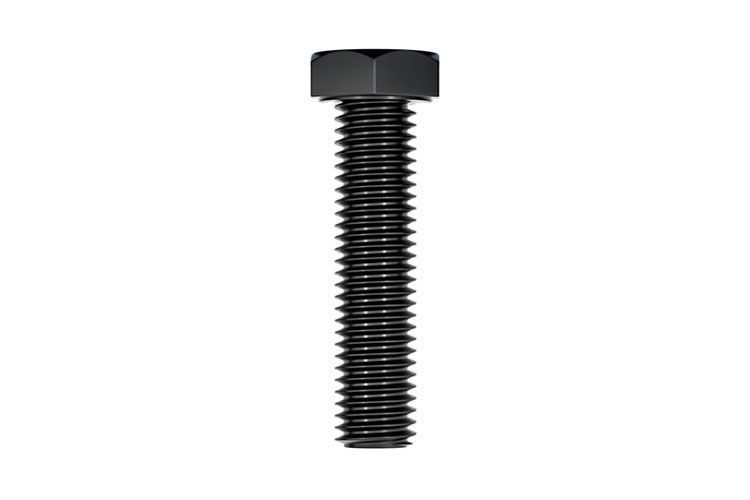
A hex bolt has a six-sided hexagonal head that is driven with a wrench, socket or spanner. The head is typically flat-topped and the shank is threaded, either fully or partially. Hex bolts are installed from one side and tightened with a nut on the opposite side, which means both ends must be accessible during assembly.
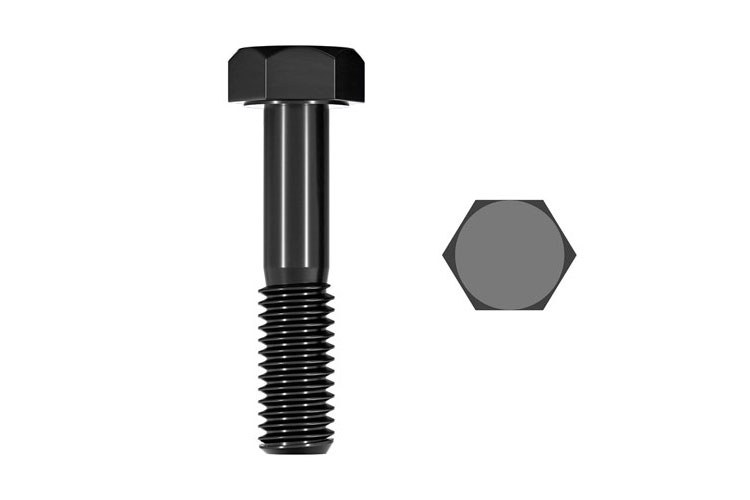
Hex bolts are manufactured in a wide range of materials and strength grades, from low-carbon steel grade 4.8 to alloy steel grades 8.8, 10.9 and 12.9. They are available with plain, zinc-plated, hot-dip galvanized and Dacromet finishes, and are defined by standards such as ISO 4014, ISO 4017, DIN 931, DIN 933 and ASME B18.2.1.
What Is a Carriage Bolt?
A carriage bolt — also called a coach bolt — has a smooth, domed head with a square neck directly beneath it. The square neck bites into the mating material, preventing the bolt from rotating while the nut is tightened. This makes carriage bolts ideal for connections where only one side is accessible, such as wood-to-wood and wood-to-metal joints.
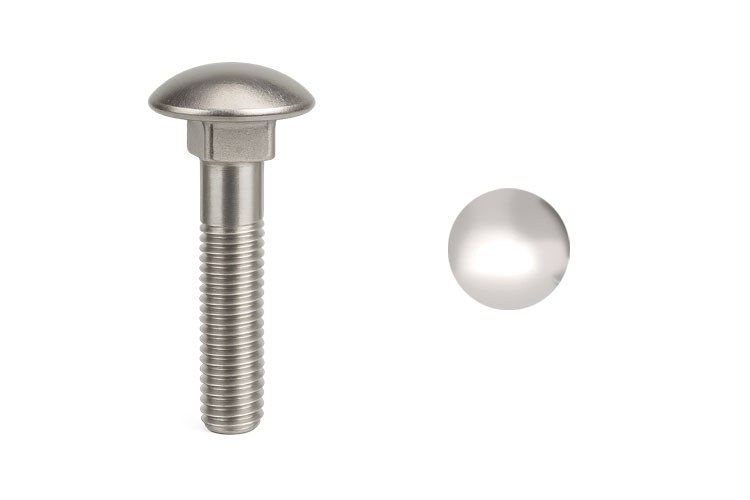
Carriage bolts are typically produced to DIN 603, ISO 8677, ASME B18.5 and GB/T 14 standards, in carbon steel, stainless steel and brass. Common applications include timber framing, fencing, furniture, playground equipment, agricultural machinery and light steel structures.
Key Differences at a Glance
| Feature | Hex Bolt | Carriage Bolt |
|---|---|---|
| Head shape | Hexagonal, wrench-driven | Domed, no drive feature |
| Anti-rotation | Requires two wrenches or clamped part | Square neck bites into material |
| Access needed | Both sides accessible | One side accessible |
| Typical use | Metal-to-metal, machinery, structures | Wood-to-wood, wood-to-metal, fencing |
| Standards | ISO 4014/4017, DIN 931/933 | DIN 603, ISO 8677, ASME B18.5 |
| Strength grades | 4.8 to 12.9 | Usually 4.8, 5.8 or 8.8 |
When to Use Each Type
Use hex bolts when you need high clamping force, a defined strength grade, and access to both sides of the joint — for example, connecting steel beams, flanges, engine components or structural frames. They allow precise torque control and are easy to remove for maintenance.
Use carriage bolts when the head side will not be reachable after assembly, or when the surface must stay smooth and safe — such as playground structures, wooden decks, fences and furniture. The domed head also resists tampering and keeps a clean appearance.
Sourcing Hex Bolts and Carriage Bolts from China
Fastener Hall is a global digital exhibition platform connecting buyers with certified fastener factories in Yongnian, Hebei — China’s fastener capital. Whether you need bolts for a construction project or a custom carriage bolt for OEM production, you can compare suppliers, request quotations and arrange quality inspection directly on the platform.
To get started, send your drawings or part numbers through our RFQ page or chat with us on WhatsApp. Our engineers typically respond within 24 hours with a detailed quotation.