
People often use the words “screw” and “bolt” interchangeably, but in engineering they are distinct fasteners with different functions. Understanding the difference matters: using a bolt where a screw is needed — or vice versa — can compromise the joint. This guide explains the technical difference and when to use each.
What Is the Difference Between a Screw and a Bolt?
The most commonly cited rule: a bolt is intended to be used with a nut; a screw is intended to be used without a nut, forming its own thread in the material. In practice, a bolt is driven by a wrench on its head and holds components together by the tension of a nut, while a screw is typically turned into a pre-drilled or self-tapping hole and holds by its own threads.
Key Differences at a Glance
Common Types of Screws
Machine screws have a uniform thread and are used with nuts, tapped holes or threaded inserts. Self-tapping screws cut their own thread in metal or plastic. Self-drilling (Tek) screws drill and tap in one step for steel and aluminium. Wood screws have a sharp point and coarse thread for timber. Sheet metal screws are designed for thin metal sections.
Common Types of Bolts
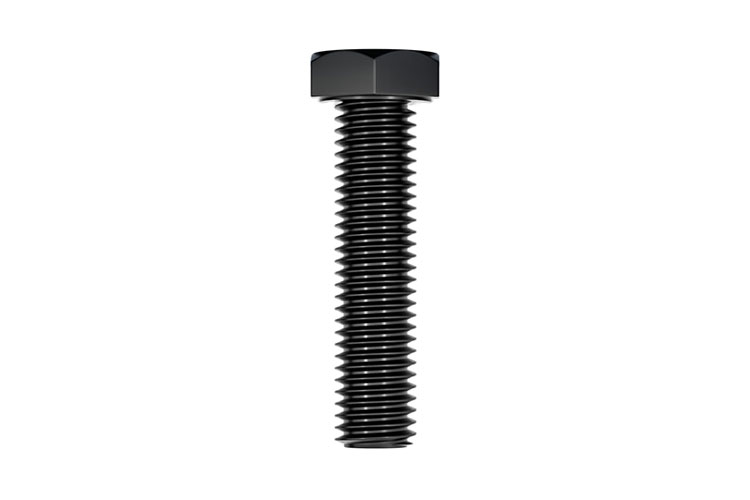
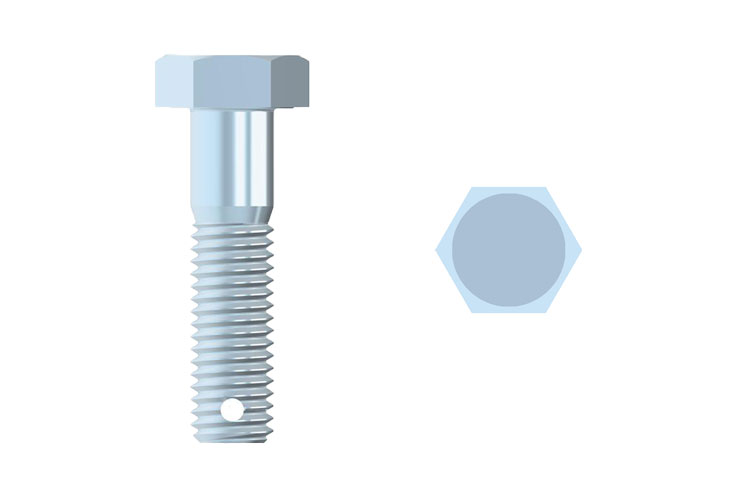
Hex bolts are the most common general-purpose bolt. Carriage bolts have a square neck for anti-rotation in wood. Flange bolts integrate a washer. Stud bolts are threaded at both ends for flanged connections. Explore the bolt collection to compare types and standards.
When to Use a Screw vs. a Bolt
Use a bolt when the joint needs high clamping force, when the parts are thick or structural, or when disassembly is frequent — for example steel frames, machinery and bridges. Use a screw when you are fastening into sheet metal, wood, plastic or electronics, or when only one side is accessible and a nut cannot be fitted.
If your project mixes both, plan the inventory carefully: screws and bolts are not interchangeable. Browse the screw range and bolt range at Fastener Hall, or submit an RFQ for specification-matched supply. Chat with us on WhatsApp anytime.
Screw Standards and Head Types
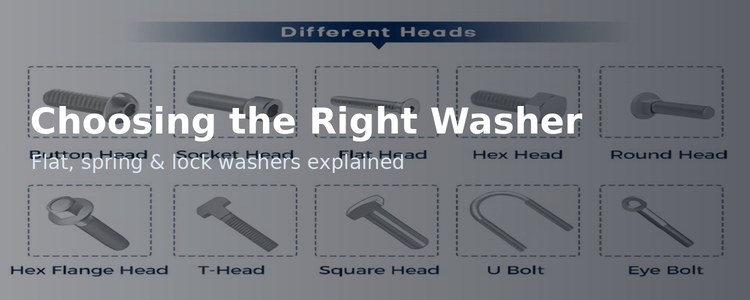
Screws are manufactured to a wide set of standards. Socket head cap screws follow ISO 4762 and DIN 912, with an internal hex drive for high torque in tight spaces. Countersunk and cheese-head screws follow DIN 965 and DIN 7984. Self-tapping screws for metal follow DIN 7981/7982/7983, while wood screws follow DIN 95/96/97. Pan head, flat head, oval head, truss head and button head are the most common head styles, each selected for appearance, drive access and load distribution.
The drive type is equally important: Phillips, Pozidriv, slotted, hex, Torx, square and hexalobular drives each suit different tools and torque levels. Torx drives resist cam-out and allow higher torque, making them popular in automotive and electronics. For high-volume production, collated screws and drywall screws with self-drilling points speed up installation.
Screw Strength and Materials
Machine screws are often specified with a property class similar to bolts: 4.8, 8.8, 10.9 and 12.9 for socket head cap screws. Stainless steel machine screws are class A2-70 (304) or A4-80 (316). Self-tapping and self-drilling screws are typically case-hardened carbon steel with a zinc or phosphate finish. For exterior and marine use, stainless steel self-drilling screws are recommended to avoid rust staining and early corrosion.
When a “Bolt” Is Really a Screw
The boundary between bolts and screws is blurred in everyday usage. A hex “bolt” screwed into a tapped hole (without a nut) functions as a screw. A machine “screw” used with a nut behaves like a bolt. The practical rule for buyers: define the joint — does it use a nut, or does the fastener form or engage threads in the material? That determines which product line and standard to order, and avoids ordering the wrong head or thread configuration.
Fastening into Different Materials
Wood screws need a sharp point and coarse thread to grip timber fibres; pre-drilling prevents splitting in hardwoods. Sheet metal screws have sharp threads that cut into thin steel or aluminium. Self-drilling screws with a drill-point tip drill their own hole and are ideal for metal roofing, cladding and ductwork. Plastic and electronics assemblies use fine machine screws, often with thread-forming designs that avoid chips. Choosing the right screw for the substrate is the single biggest factor in joint reliability.
Torque and Installation
Screws are driven to a defined seating torque; over-driving strips the threads in the material or the screw head, while under-driving leaves a loose joint. Use a clutch or torque-limited driver for production. For bolts, torque plus angle control is used for structural connections to reach the design preload. Always check the manufacturer torque table for the specific size, thread, material and lubrication condition.
Sourcing Screws and Bolts: Checklist
When requesting a quote, specify: (1) fastener type (screw or bolt), (2) standard (ISO/DIN/ASTM/ASME/GB), (3) size (diameter × length), (4) thread form, (5) head style and drive, (6) material and finish, (7) quantity and packaging. Sending a photo or drawing of the original part removes guesswork. Fastener Hall supplies both product lines with full documentation and export packing.
Frequently Asked Questions
- Is a lag screw a bolt? No — a lag screw (lag bolt in US) forms its own thread in wood and is driven with a wrench; it is used without a nut.
- Can a self-tapping screw go into steel? Self-tapping screws cut threads in softer metals; for structural steel, use self-drilling (Tek) screws with a hardened drill point.
- What does “countersunk” mean? A flat head that sits flush with the surface when screwed into a pre-drilled countersink.
- Do you mix screws and bolts in one order? Yes — many clients order both lines together for complete assemblies; we handle mixed orders without minimums per line.
- How do I prevent screws from rusting outdoors? Use stainless steel or hot-dip galvanized screws matched to the environment.
In summary, matching the fastener to the joint — bolt with nut for structural loads, screw with self-tapping or self-drilling features for sheet materials — saves time, cost and rework. Fastener Hall supports both product lines with engineering advice, samples and factory-direct pricing.